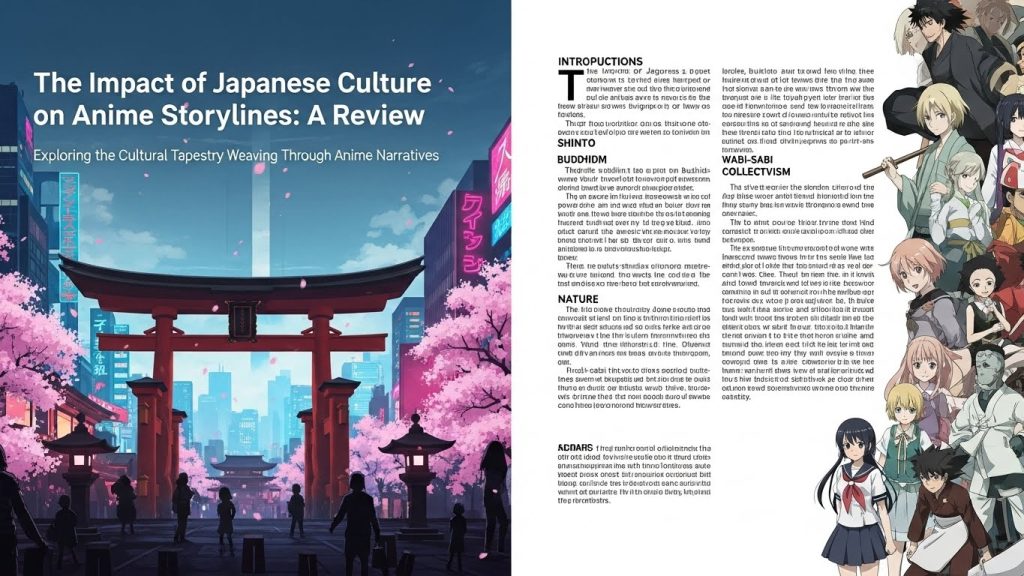
The Impact of Japanese Culture on Anime Storylines: A Review
Anime is a globally recognized art form that has captivated audiences with its unique storytelling, vibrant art, and compelling characters. However, beyond the colorful visuals and engaging plots, anime is deeply rooted in Japanese culture and tradition. This review explores how Japanese culture influences anime storylines and the unique elements that make anime a distinctive medium for storytelling.
Understanding the Roots: Historical Influences
Japanese culture is rich with history and tradition, and these elements have a profound impact on anime narratives. The influence of historical events, traditional customs, and folklore can be seen throughout anime. For instance, the samurai era, marked by its notions of honor and duty, often inspires anime set in feudal Japan. Series like “Rurouni Kenshin” and “Samurai Champloo” not only entertain but also educate viewers about Japan’s past.
Moreover, Japanese folklore and mythology are frequently interwoven into anime. Characters like yokai, tengu, and other mythical beings are staples in many series. Shows such as “Spirited Away” and “Princess Mononoke” by Studio Ghibli are prime examples where traditional folklore plays a crucial role in shaping the story.
Social Structures and Norms
Japanese societal norms and structures greatly influence anime storylines. The importance of family, hierarchical relationships, and social harmony are often depicted. For example, the concept of ‘wa’, or harmony, is central to many anime, where characters strive to maintain balance in their personal and social lives. This is evident in slice-of-life series like “Clannad” and “March Comes in Like a Lion”.
Additionally, the Japanese education system, with its rigorous academic environment, is a common setting in anime. Series like “My Hero Academia” and “Assassination Classroom” portray the pressures and friendships formed in school, reflecting the real-life significance of education in Japanese culture.
Religious and Philosophical Themes

Religion and philosophy also play a significant role in shaping anime storylines. Shintoism and Buddhism, the predominant religions in Japan, often serve as a backdrop for anime themes. The concept of spirituality and the afterlife is explored in anime like “Death Note” and “Bleach”, where characters grapple with moral dilemmas and the consequences of their actions.
Moreover, the influence of Zen philosophy, with its emphasis on meditation and mindfulness, is evident in anime narratives. This is particularly apparent in series such as “Mushishi” and “Natsume’s Book of Friends”, where introspection and a connection to nature are central themes.
Traditional Arts and Aesthetics
Japanese aesthetics, deeply rooted in traditional arts, have significantly influenced anime’s visual style and storytelling techniques. The concept of ‘wabi-sabi’, which finds beauty in imperfection and transience, is often reflected in anime. This is evident in the melancholy yet beautiful storytelling of “Your Lie in April” and “5 Centimeters per Second”.
Furthermore, traditional Japanese arts such as calligraphy, tea ceremonies, and ikebana (flower arranging) are frequently featured in anime as metaphors for character development and thematic exploration. An example is “The Garden of Words”, where the art of shoemaking becomes a symbol of the protagonist’s journey.
Modern Japanese Culture and Anime
As Japan has evolved, so too has its cultural influence on anime. Modern societal issues such as urbanization, technology, and globalization are prevalent themes. Anime like “Ghost in the Shell” and “Psycho-Pass” explore the impact of technology on humanity, reflecting contemporary societal concerns.
Additionally, the phenomenon of ‘otaku’ culture—dedicated fan communities—has become a topic within anime itself. Series like “Welcome to the N.H.K.” and “Genshiken” offer a meta-commentary on fandom and the anime industry, bridging traditional and modern cultural expressions.
Conclusion: Anime as a Cultural Bridge
Japanese culture’s impact on anime extends beyond mere storytelling; it provides a lens through which audiences worldwide can understand and appreciate Japanese traditions and social nuances. By blending historical, social, and contemporary elements, anime serves as a bridge between cultures, offering both entertainment and education.
As anime continues to evolve, its roots in Japanese culture remain a significant influence, ensuring that while the medium may change, the essence of what makes anime uniquely Japanese remains intact. Through the lens of anime, we gain insight into a culture that is both ancient and modern, traditional and innovative, making it a truly remarkable art form.
Anime’s Role in Promoting Japanese Culture Globally
Anime has become a powerful cultural export for Japan, introducing audiences around the world to Japanese traditions, values, and philosophies. This global influence is evident in the increasing popularity of anime conventions, cosplay events, and the widespread availability of anime through streaming platforms. By engaging with these cultural products, international audiences form a deeper connection with Japanese culture, often leading to an interest in learning the language, visiting Japan, or exploring other aspects of its cultural heritage.
Furthermore, anime serves as an ambassador for Japanese culture, promoting understanding and appreciation across cultural boundaries. Through its diverse genres and storytelling styles, anime addresses universal themes such as love, conflict, and identity, while maintaining a distinctly Japanese perspective. This has allowed anime to resonate with a wide range of viewers, transcending cultural and linguistic barriers.
The Influence of Japanese Art and Architecture
Traditional Japanese art and architecture also significantly impact anime, contributing to its distinctive visual style. The use of vibrant colors, intricate designs, and unique architectural elements is a hallmark of many anime series. For instance, the influence of Edo period art can be seen in the detailed backgrounds and character designs of shows like “Mononoke” and “Hell Girl”.
Additionally, iconic Japanese architectural features, such as torii gates, traditional wooden houses, and Zen gardens, are frequently depicted in anime. These elements not only provide a sense of authenticity but also immerse viewers in the cultural setting of the story. An example is the anime “Kimi no Na wa” (Your Name), where the juxtaposition of urban and rural landscapes highlights the contrast between traditional and modern Japan.
Food as a Cultural Element in Anime
Japanese cuisine, with its emphasis on seasonal ingredients and aesthetic presentation, plays a significant role in anime. Food serves as a cultural touchstone, showcasing traditional dishes and the social rituals surrounding meals. Anime like “Shokugeki no Soma” (Food Wars!) and “Sweetness & Lightning” depict the art of Japanese cooking, from family meals to gourmet competitions, illustrating the cultural significance of food in everyday life.
The portrayal of food in anime often goes beyond mere sustenance; it becomes a medium for character interaction and development. Shared meals foster relationships and convey themes of community and hospitality, reflecting the importance of food in Japanese culture.
The Future of Anime and Cultural Representation
As anime continues to gain popularity worldwide, the balance between staying true to its Japanese roots and appealing to a global audience becomes increasingly important. The challenge lies in preserving the cultural authenticity that defines anime while embracing diverse perspectives and storytelling techniques.
Emerging trends in anime production, such as collaborations between Japanese creators and international artists, suggest a future where anime becomes even more inclusive and representative of global cultures. This evolution promises to enrich the medium, offering new opportunities for cultural exchange and understanding.
Ultimately, the impact of Japanese culture on anime storylines is an enduring testament to the power of cultural storytelling. By weaving together traditional and contemporary elements, anime not only entertains but also educates and inspires, bridging cultural divides and fostering a deeper appreciation for the richness of Japanese culture.
In conclusion, anime’s influence on global culture is profound, offering a unique blend of entertainment and education that captivates audiences worldwide. As we continue to explore the diverse narratives and artistic expressions within anime, we gain valuable insights into the cultural tapestry of Japan, enriching our understanding and appreciation of this dynamic art form.
Anime as a Tool for Cultural Education
Anime has also become a valuable educational tool, offering insights into Japanese history, society, and values in an engaging format. Educators and cultural enthusiasts often use anime to introduce learners to Japanese culture, as it presents information in a way that is both accessible and intriguing. Through its storytelling, anime can highlight cultural practices, social dynamics, and historical events that might otherwise remain unfamiliar to international audiences.
For instance, anime like “Sengoku Basara” and “The Tale of the Princess Kaguya” delve into specific historical periods, providing context and narrative to Japan’s rich historical tapestry. These series can spark interest and encourage further exploration into Japanese history and cultural studies, making anime a gateway to deeper learning.
Cultural Sensitivity and Representation
As anime’s reach extends globally, creators are increasingly mindful of cultural sensitivity and representation. While anime predominantly showcases Japanese culture, it also explores themes and settings from other cultures, necessitating a careful approach to avoid stereotypes and cultural inaccuracies.
The anime industry is gradually becoming more inclusive, with creators striving to accurately represent diverse cultures and perspectives. This shift not only enhances the quality and authenticity of the narratives but also broadens anime’s appeal to a more diverse audience. By embracing cultural diversity, anime can continue to evolve as a global art form that celebrates and respects cultural differences.
Anime and Cultural Identity
For many fans, anime serves as a medium through which they can explore and express their cultural identity. The characters, stories, and themes often resonate on a personal level, providing a sense of connection and belonging. This is particularly true for individuals of Japanese descent living abroad, who find in anime a link to their heritage and cultural roots.
Moreover, anime’s portrayal of universal themes such as friendship, love, and the struggle for identity allows viewers from all backgrounds to find common ground and forge connections across cultural lines. This shared experience fosters a sense of global community among anime fans, united by their love for the medium and its cultural significance.
The Role of Anime in Cultural Diplomacy
Anime also plays a role in cultural diplomacy, acting as a soft power tool for Japan. By promoting Japanese culture in a positive light, anime enhances Japan’s global image and fosters goodwill among international audiences. This cultural diplomacy extends beyond entertainment, influencing areas such as tourism, trade, and international relations.
Through events like international anime festivals and collaborations with foreign studios, Japan strengthens its cultural ties with other nations, promoting mutual understanding and cooperation. As anime continues to capture the imaginations of audiences worldwide, its potential as a bridge for cultural diplomacy remains significant.
Conclusion: The Enduring Impact of Japanese Culture on Anime
The impact of Japanese culture on anime storylines is profound and multifaceted, enriching the medium with depth and authenticity. From historical influences and social norms to traditional arts and modern societal issues, Japanese culture provides a rich tapestry for anime creators to draw upon.
As anime continues to evolve and expand its global reach, its roots in Japanese culture remain a vital source of inspiration and identity. This connection ensures that anime remains a unique and powerful medium for storytelling, capable of bridging cultural divides and fostering a deeper understanding of Japan and its people.
In exploring anime, viewers embark on a journey through Japan’s cultural landscape, gaining insights into its history, values, and traditions. This cultural exploration not only entertains but also educates, offering a window into a world that is both familiar and foreign, traditional and modern. As such, anime stands as a testament to the enduring power of cultural storytelling, captivating audiences and inspiring generations to come.
About the Author