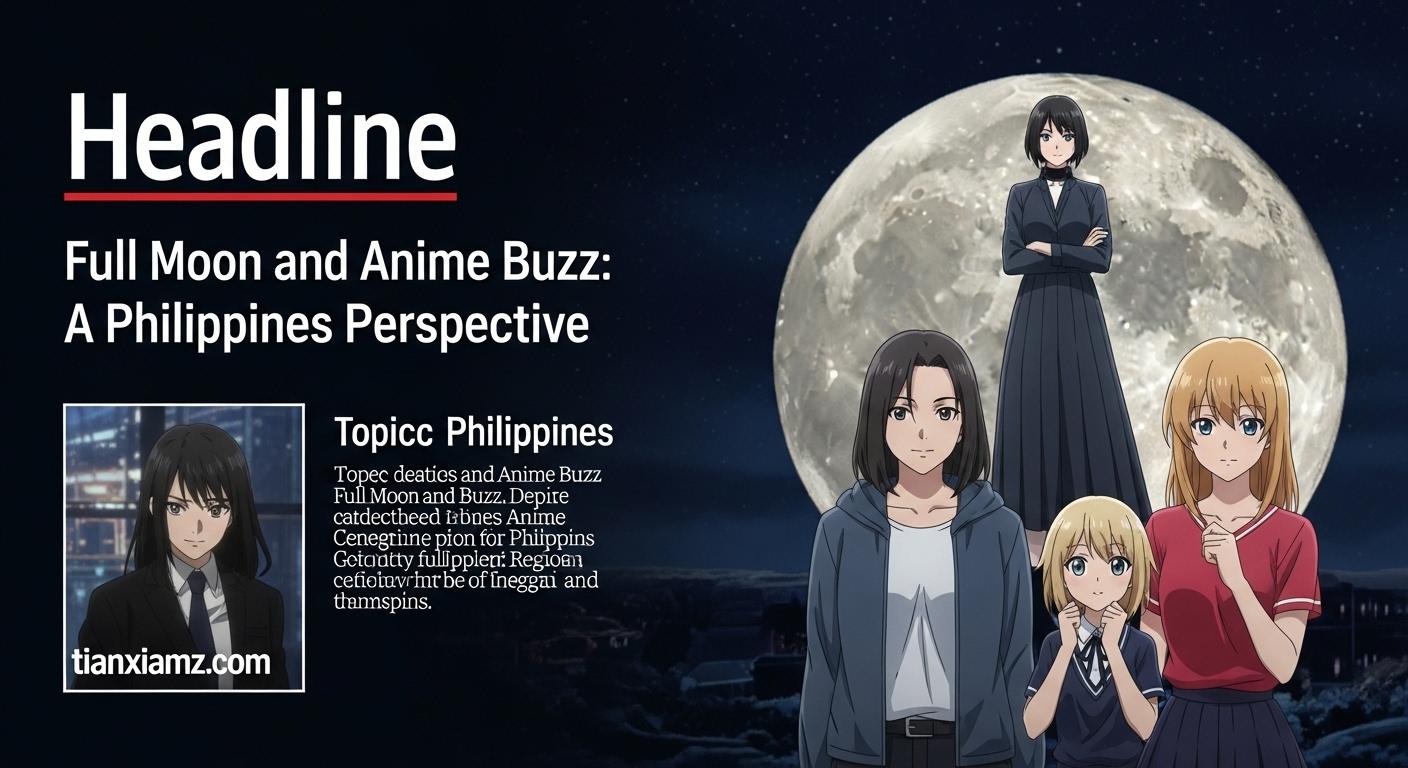
Anime fans under a full moon in a Philippine setting, watching a screen in a dim arcade.
Updated: April 8, 2026
Across the Philippines, anime fans often synchronize viewing rhythms with broader cultural rhythms—one of which is the full moon. This lunar motif routinely appears in fan chatter, countdowns, and speculative threads about upcoming anime releases or cross-media events. In March 2026, a wave of online discussion has foregrounded the full moon as a possible timing cue for announcements or premieres. This analysis aims to frame the discussion in concrete terms: what is confirmed, what remains speculative, and how readers can navigate the chatter with disciplined sourcing.
What We Know So Far
- Confirmed: As of this writing, there is no verified official announcement from major anime studios or streaming platforms about a full moon–themed release or event scheduled for March 2026. This assessment relies on publicly available calendars and official publisher channels, which have not published a concrete date or title tied to a lunar motif.
- Confirmed: The Philippines’ anime community is actively discussing lunar motifs in popular titles, and fans are creating speculative timelines based on past patterns where lunar events align with episode arcs or seasonal premieres. This activity is organic and aligns with fan-driven discourse, not with verified product steps.
- Unconfirmed: Several social posts claim forthcoming arcs, collaborations, or cross-media events timed to a specific lunar phase. These claims are not corroborated by independent reporting, official posts, or publisher calendars and should be treated as rumors.
What Is Not Confirmed Yet
- [Not Confirmed] The exact title, platform, or release window for any lunar-themed project remains unconfirmed. No studio or distributor has issued a formal schedule that ties a title to the full moon in March 2026.
- [Not Confirmed] Localization plans (Filipino dubbing, subtitle timing, and regional streaming windows) have not been publicly verified for any rumored project.
- [Not Confirmed] Any cross-media tie-ins—such as merch drops, live events, or fan meetups—in connection with a full moon schedule—that would anchor expectation in verifiable details are not confirmed.
Why Readers Can Trust This Update
Trustworthy reporting starts with clear sourcing and restraint in elevating rumor to fact. This piece anchors its assessment in publicly accessible schedules and astronomy-informed context to separate what is known from what is merely circulated online. We reference established references to lunar phases and full moon calendars as a backdrop to fandom discourse, not as indicators of specific product timelines. The approach is to document what fans are saying while clearly marking where official confirmation is required before any projection becomes reporting.
Context matters: the Philippine market for anime is highly synchronized with global release cadences but also sensitive to regional streaming rights and localization. In practice, a verified release in Manila may depend on licensing windows, platform-specific premieres, and subtitling pipelines that are not determined solely by lunar timing. Readers should view lunar motifs as cultural markers for fan engagement rather than as reliable predictors of actual release dates.
Actionable Takeaways
- Follow official sources: monitor studio announcements, platform blogs, and press releases for primary information rather than relying on social media chatter.
- Cross-check with reputable astronomical calendars to understand when a full moon occurs, so you can distinguish popular timing myths from verifiable dates.
- Engage with Philippine fan communities thoughtfully: treat rumors as speculation, and look for corroboration from multiple credible outlets before sharing or acting on it.
Source Context
Background reading and corroborating context for the lunar timing discourse include:
- Astronomy Magazine: Full Moon Calendar
- Moon phase today: What the Moon will look like on March 3
- BBC Sky at Night Magazine: Blood Moon Lunar Eclipse
Last updated: 2026-03-04 19:55 Asia/Taipei
From an editorial perspective, separate confirmed facts from early speculation and revisit assumptions as new verified information appears.
Track official statements, compare independent outlets, and focus on what is confirmed versus what remains under investigation.
For practical decisions, evaluate near-term risk, likely scenarios, and timing before reacting to fast-moving headlines.
Use source quality checks: publication reputation, named attribution, publication time, and consistency across multiple reports.
Cross-check key numbers, proper names, and dates before drawing conclusions; early reporting can shift as agencies, teams, or companies release fuller context.
When claims rely on anonymous sourcing, treat them as provisional signals and wait for corroboration from official records or multiple independent outlets.