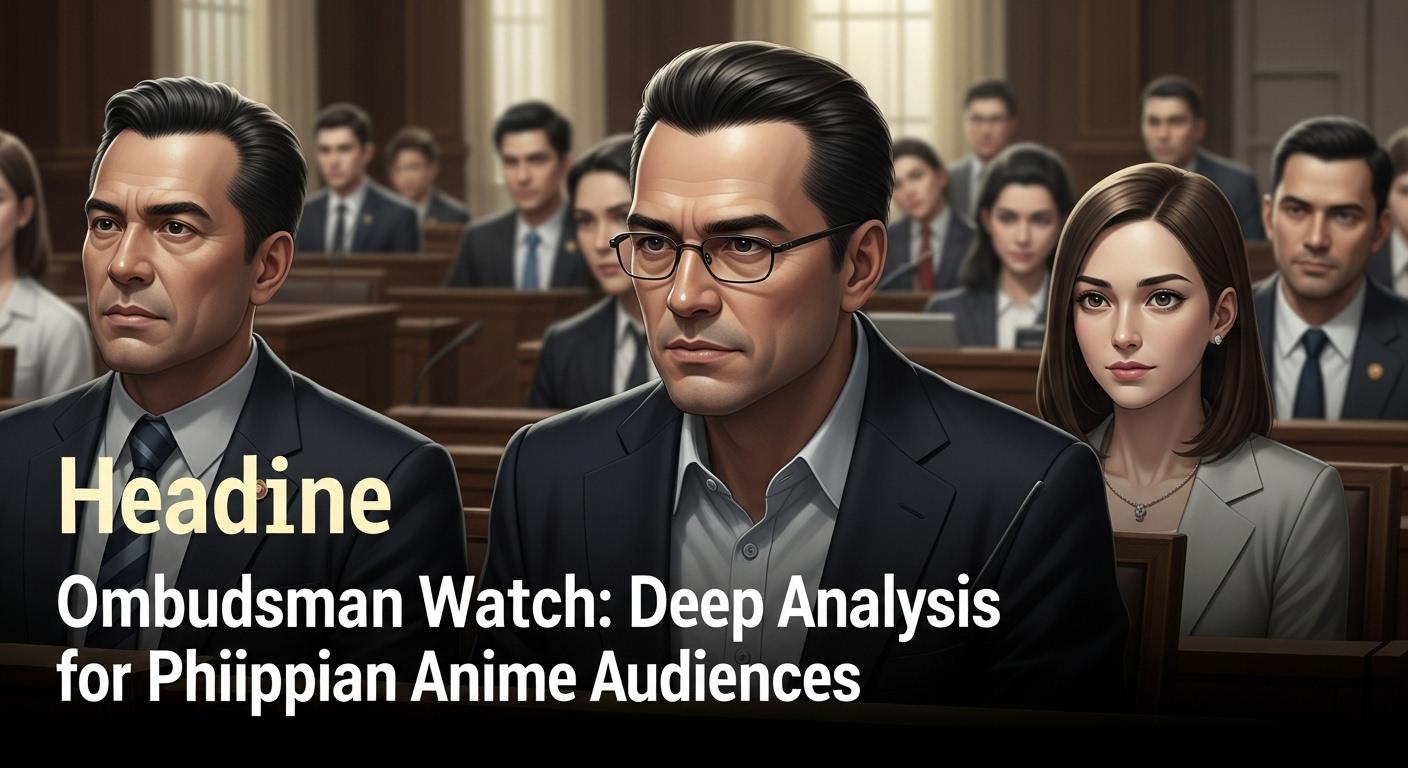
Anime newsroom scene featuring a writer at a desk with ombudsman and Philippine motif imagery.
Updated: March 16, 2026
In the Philippines, the ombudsman stands as a crucial check on public power, shaping policy, accountability, and the ecosystem that sustains anime culture—from licensing to public communication. This analysis examines how ombudsman actions and governance signals could ripple through the space where fans, creators, and policymakers intersect, offering a disciplined view of what is known, what remains uncertain, and why readers should trust this update.
What We Know So Far
- Confirmed: Reports indicate the ombudsman remains in office following recent judicial developments that affected governance discussions. The coverage notes continued official status rather than dismissal or removal.
- Confirmed: The Attorney General’s Office has conducted searches at the Ombudsman Building in relation to a case described in coverage as the Fried Oil Case, highlighting active investigative activity in proximity to the ombudsman’s offices.
- Cross-jurisdictional context: In Romania, the ombudsman referred a government public administration reform bill to the Constitutional Court, illustrating how ombudsman offices can interact with judicial bodies in governance matters. This serves as a comparative reference rather than a PH-specific outcome.
What Is Not Confirmed Yet
- Unconfirmed: Any direct linkage between ongoing ombudsman investigations and changes to the Philippine anime licensing landscape or streaming policies has not been announced by official PH authorities.
- Unconfirmed: Specific policy proposals or budget decisions tied to ombudsman activity that would impact creators, distributors, or broadcasters in the anime space are not publicly confirmed at this time.
- Unconfirmed: The applicability of the cross-jurisdictional Romania example to Philippine governance or media policy remains speculative and has not been proposed as PH policy.
Why Readers Can Trust This Update
This analysis relies on multiple publicly reported items from recognized outlets and mirrors standard newsroom practice: confirm through independent reporting, clearly separate facts from speculation, and provide transparent sourcing. The subject—ombudsman activity in governance—requires careful framing to avoid conflating jurisdictional specifics with national PH policy. Our coverage here clearly distinguishes confirmed actions (office status, investigative activity) from unconfirmed inferences (policy shifts affecting anime licensing) and cites sources for every factual item discussed.
Editorial diligence is complemented by cross-referencing content from domestic and international sources that discuss ombudsman activities in governance contexts. When we reference external reports, we attribute them and link to the original material so readers may verify independently.
Experience in governance reporting underpins the approach: the ombudsman is a complex institutional node whose impact depends on jurisprudence, administrative behavior, and public communication. Readers can expect ongoing updates as official statements and court actions unfold.
Actionable Takeaways
- Follow official ombudsman announcements and credible news outlets for updates on office status and major investigative actions.
- When reading claims about policy shifts, look for concrete PH government releases or legislative filings rather than secondary interpretations.
- For anime fans and creators, monitor communications from regulatory bodies that oversee licensing, distribution, and content standards to understand potential impacts on releases and collaborations.
- Cross-check cross-jurisdictional comparisons (like Romania’s case) as background context, not as direct PH precedent.
- Support independent journalism that provides transparent sourcing and explicit labeling of confirmed versus unconfirmed information.
Source Context
The following sources informed this analysis. They are cited to provide verifiable context for readers who wish to explore the details behind each point.
Last updated: 2026-03-10 00:27 Asia/Taipei
From an editorial perspective, separate confirmed facts from early speculation and revisit assumptions as new verified information appears.
Track official statements, compare independent outlets, and focus on what is confirmed versus what remains under investigation.
For practical decisions, evaluate near-term risk, likely scenarios, and timing before reacting to fast-moving headlines.
Use source quality checks: publication reputation, named attribution, publication time, and consistency across multiple reports.
Cross-check key numbers, proper names, and dates before drawing conclusions; early reporting can shift as agencies, teams, or companies release fuller context.
When claims rely on anonymous sourcing, treat them as provisional signals and wait for corroboration from official records or multiple independent outlets.